Writing Critiques and How TM has changed my view.

As a child I remember my father critiquing me for anything he believed I did wrong. If I stood with my hands on my hips, “That looks Gay”, or when I’d get bad grades, “You’re stupid.”

This type of critiquing didn’t go well with my creative side, it impeded it.

Now that I have kids and don’t say those things to them, I learned more about what is a good critique and a bad one and how TM figures in to my writing.

The one thing about TM, is that I no longer care as much about the past, or the future. I’m finally able to live in present, and with the present I’m able to handle criticism a lot better.

I recently got my edits back from an editor, though they’ll change the way I write, they’ll also let me grow as a writer, which is more important.

The edits were on a draft of a novel I wrote and they’re what I’ve wanted to hear from someone who knew what they were talking about.

I’ve attended Meet-Ups, but a lot of them are just a bunch of people gathered to drink at a bar, which may be fun for those who aren’t serious about the craft, but for me they limited what I wanted to do and they were detrimental to my craft.

I knew going in to writing that I needed work, and with the notes I received, I know what I need to fix, and I’m also now more aware of my writing issues.

I no longer live in a world where I care if I’m berated for not cleaning my room, but that prepared me for writing more than anything.

As a kid I had to have thick skin, but I also became aware that I could write to escape things, which went hand-in-hand.

TM allows me to worry less about the critiques I received in the past and let me focus on my present writing issues.

Being critiqued is part of writing, and being critiqued well are the best kind of critiques.

Before TM I was fearful of being critiqued and based what I knew on my experience with my father.

I now know that a critique should be a lesson and not a reprimand.
Writing the each and every

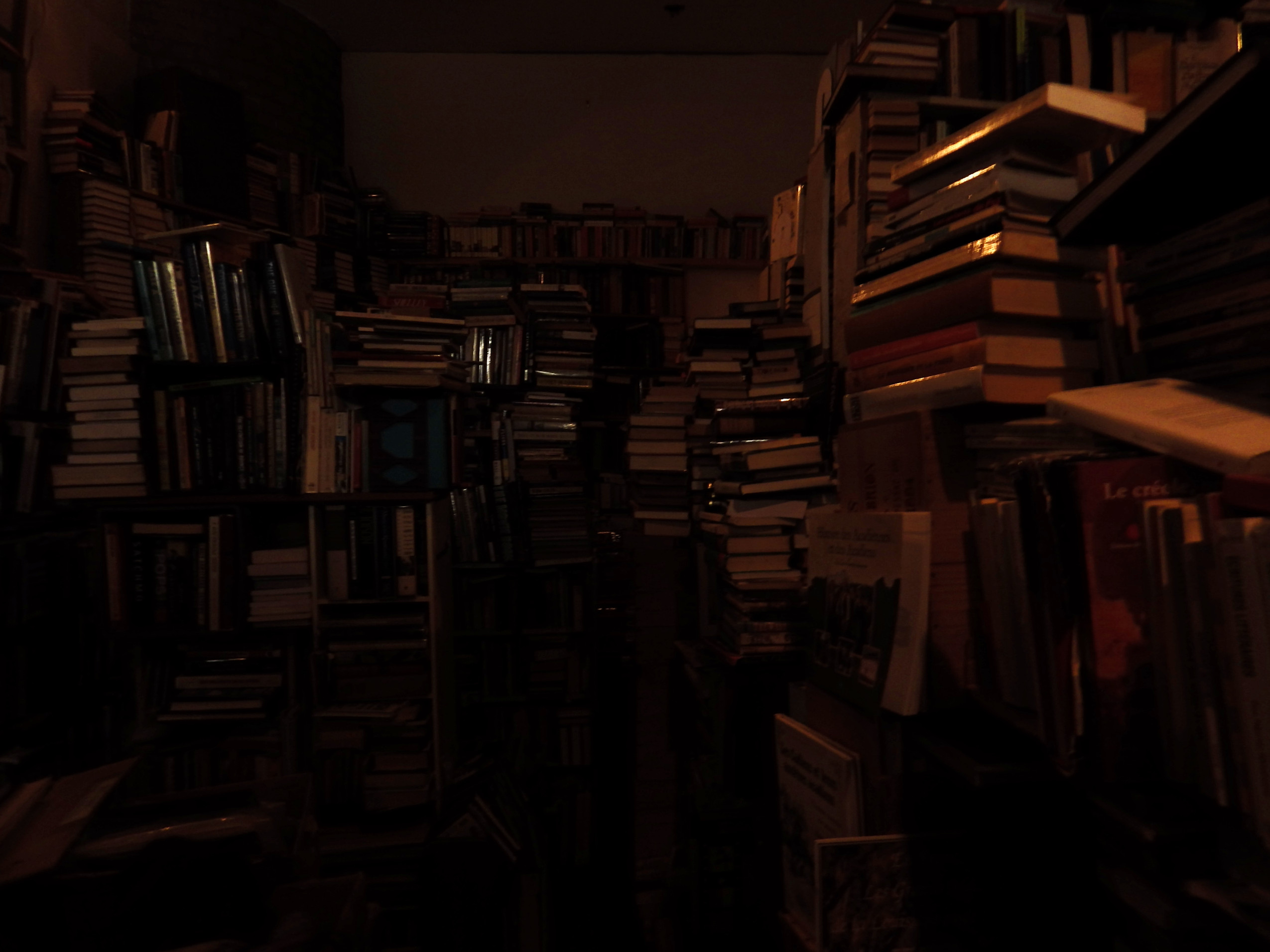
Books Stacked to the ceiling in New Orleans book shop.

Books Stacked to the ceiling in New Orleans book shop.

The window is cracked,  there’s a soft breeze across the desert and the blue skies stand out against a cloudless sky.

I watch my kids run through the room,  their clothes catching the breeze, my daughter’s cape flapping,  my son’s mask pressed tightly to his face.

My superheroes tear up the house as they chase each other.

Watching I’m reminded of the things I focus on too much, and the things I must focus on more.

We happen to think about our writing, at least as early writers, as horrible.

The reason we think this way is mostly because it is, at least for most of us, I mean we’re not all genius level writers, we have to learn to write well.

The thing about watching my kids play on a daily basis, they do their playing oblivious to the world around them.

This is what new writers usually don’t do.

They don’t write and ignore the world, they may get their writing time in, but they don’t lock themselves away like the more experienced writers.

The wind begins to die down, my kids are preparing for lunch, or dinner, I’m not sure as the day has moved by faster than normal, and in between the hours of my writing schedule; I see their asking for daddy to play.

I skirt away from the desk to play with them, as they beg me to get away from my writing.

I stop them, “I have a few hundred words to go. After I’m done, I promise.” I tell them.

After the hundred words, I set aside the laptop, rush downstairs as they sit on the couch, eager for a trip to the park.

Another sunset comes, we head back to the house, my wife is getting started on dinner, I pitch in, cutting the chicken, as I learned in a meat store in my late teens, and sit down as the I put music on the radio.

It’s one of my favorite days, but it’s still a writing day.

They’re finally asleep, my wife is doing the dishes, I have my laptop out again to get my notes from the day added to my laptop.

I finish and sit with my wife for an hour watching Supernatural.


Writer’s and their Window Dressing.

They gather in the field, each one of them finding something they hadn’t thought would be there.

Standing in the sun, the crisp air moving through the pasture, the scent of lilacs flows through.

The lilacs, like the people are window dressing for the start of a story, they are something to use, something to give the reader a taste of the future of the story.

Will the scent of lilacs be used later in the story? Will it ever come up again, who knows.

The story we tell, and the window dressing we use to invite readers into our story is what makes us writers. There are our tools.

The window dressing is only a peak, just as the field, whomever is in the field, the crisp air and the scent of lilacs is dressing.

Each of us use different things for window dressing, but it’s all window dressing.

Standing in the middle of the street, he waves his arm while another taxi flies past him.

The ledge he stands on suctions him to curb, the drop is hundreds of feet, but he still tries to get a taxi, even as another ignores him and flies by in a gust of air.

Depending on how you read the above, or whether you understand that the story is possibly science fiction, you see the story differently.

Each story is different because each writer is different.

Something you write may not be published when another writer’s work is, that’s just how it is, and genre doesn’t matter.

Our writing is ours; it belongs to no one else. We write because we’re writers.

What are you using for window dressing to pull readers in?

Writing and finding the Honey Pot

The laughter, pain and confusion of the day rolls by. We’re seething with what we’ve seen, but we put that away, stare at a blank screen and write.

Daily we see things, things which we’re sick about, confused about and sometimes, scared about.

When we see these things we could be worried about what it will do to us. Whether it may cause us mental harm or if, and this is a big if, whether it will affect our writing or on the off-chance, it may do things which could bring out the worst in us.

These are the moments we should be taking notes.

These are when our environment is giving us cues into the labyrinth of the world. This labyrinth hides many things, but sometimes it leads us to creativity, great wonderful ribbons of creativity filled with long writing sessions and awesomely incredible characters.

Our notes, whether written or jotted down in the folds of our grey matter, are the things which lead to the creative honey pot, and like Winnie the Pooh we should bury ourselves in the honey pot, finding every little piece of honey until we’re full.

The honey pot comes more with each time we take these notes, and it continues until we don’t need the notes anymore and we’re just experiencing the things around us, but our subconscious is taking notes, which will be unlocked in our writing session later.

Finding the honey pot, and getting our fingers into the warm, gooey wonderfulness keeps us writing every day.

Without the honey pot, we’re left with a blank page, nothing more.

The more we write, the more the honey pot comes into play and the less we realize we’re pulling from it, but afterward, when we’re reading our stories, that’s when the realization of the honey pot hits us.

It’s always there, but it comes more often when we’re writing regularly.

The best thing to do is get out, experience things, live and do the things you’ve wanted to do and never hold back from what you’ve wanted to do. Then you’re free to find the honey pot and it will appear when you least expect it.

Dig in, find the honey pot, take notes and write, and when you think you’ve written enough, write some more.

Writing is Believing

stacked books

Life is full of wonderful beautiful things. We know this through our discovery of the world around us.

We see them walking through a park, hear them at a concert and smell them at our favorite restaurant. Then why is it so hard to believe in our writing?

There are many reasons for our lack of belief. but the main ones I’ll list here, then I’ll make you believe.

  • We’ve been told by someone we trust that our writing is horrible.
  • We think there is some kind of magic those who’ve been published possess.
  • Your family doesn’t support you, this is the hardest to deal with.
  • You don’t believe in yourself.

Let’s begin with the First disbelief: It’s not that your writing is horrible, it may be that the person you’ve let read it doesn’t understand your story.

My wife doesn’t enjoy reading sci-fi or fantasy, she’ll read some of my stories and just stare at me. That’s how I know I need different eyes on the story than hers, because hers aren’t the correct lens to view the story and I have to find someone else.

You have to find someone who enjoys the same type of story you’re writing or there will be issues with whether they like it.

Second disbelief: There is no magic pill. There is nothing to change your writing from having grammar issues to not.

When I first started writing I bought a lot of books on writing. I did this because I believed in the myth that there was a magic pill or book to help me. What I learned is this, The only thing that will improve writing is to write. The more you write, and nearly more importantly read, the better your writing will be.

There is no magic book to help you. You can learn a lot from those books, but mostly you’ll only be frustrated and envious of the book’s author, which is never good.

Third disbelief: Having a support staff is wonderful, but sometimes there isn’t one.

When I was writing short stories and angst ridden poems in my teens, I never showed them to anyone because I didn’t want to be judged by my peers, parents or teachers.

Unless it was for my writing class, no one saw it, not even a girlfriend. That last part was mostly from learning that those you date will use things you’ve told them against you in the harshest ways possible.

I didn’t have many friends in high school, and even less in middle school, but those I did have had no interest in my writings. Showing them to my parents would have been a one way ticket to a therapist’s office, not a good thing.

Fourth disbelief: Your lack of faith in yourself is always the thing which holds you back from doing so many things.

You worry about the consequences. About the after..

Look at what you do as if there were no After.

We should think about life as right now. What you’re doing right now, what you’re writing right now is the most important story in the world.

Remind yourself of this daily, either through meditation, prayer or notes pasted around your dwelling.

These subtle things will keep you wanting to do the things for you. They’ll remind you of a couple of things, 1, You’re important…2, What you write is important and 3, You’re important.

Finding yourself and not doing what the world wants is what makes each of us unique.

Keep being unique, never let anyone change that and keep writing…